Analysis: Liquid Death
How a company turned a commodity into a $1.4 billion empire
How Liquid Death Sold Water for a Billion Dollars
Mike Cessario was standing in a crowd at the 2009 Vans Warped Tour when he watched a kid pour water into an empty Monster Energy can. The kid wanted to stay hydrated. He also wanted to look like he belonged. The Monster can did the second job. The water did the first. Cessario walked away with a question that took him ten years to answer: why does water get marketed like a hospital product when the people drinking it want to feel like they're getting away with something?
He had spent years in advertising, including a stretch at VaynerMedia and a creative director role at Netflix. He knew how brands were built. He also knew that the bottled water aisle was the most boring shelf in the building. Mountains, springs, dewdrops. Every brand selling the same liquid told the same story of purity and calm. Cessario looked at it and saw open territory.
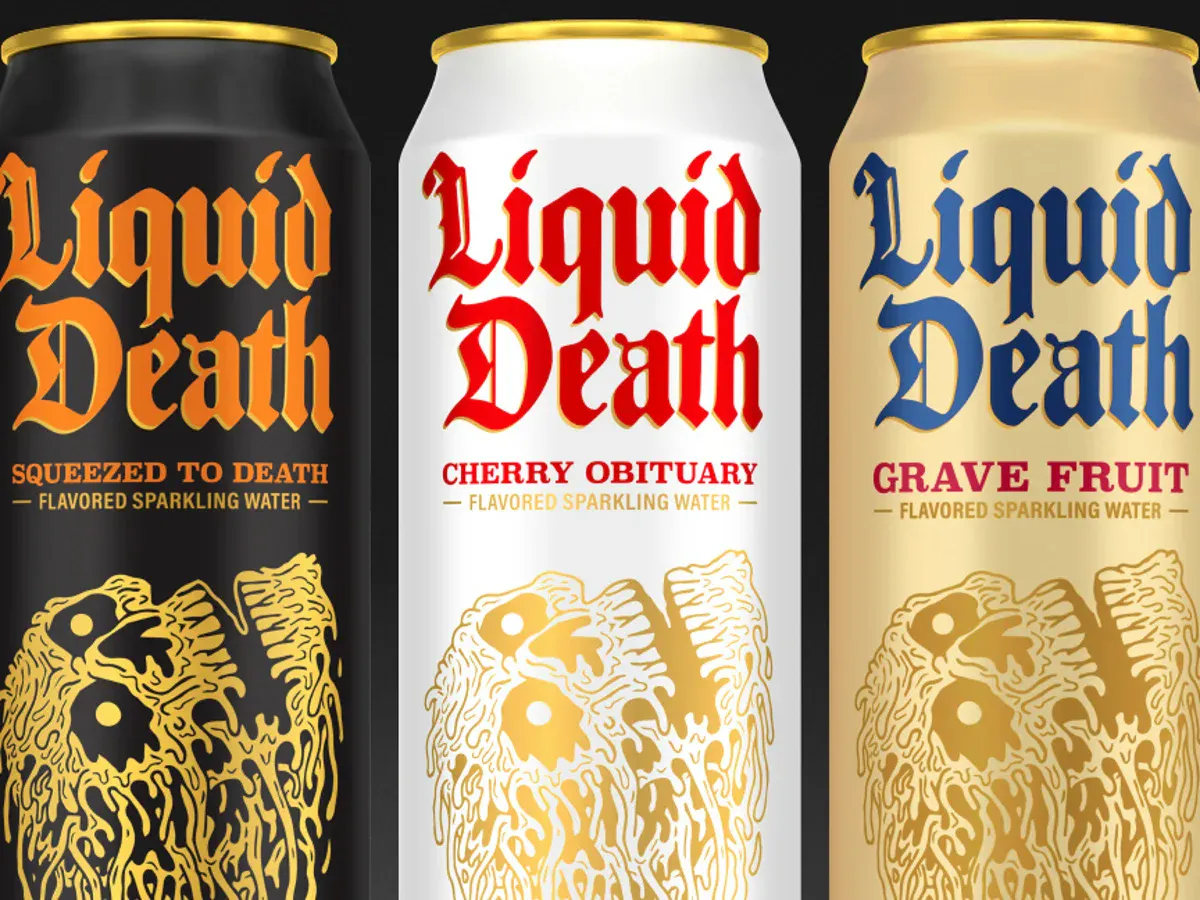
He launched in January 2019 with water in a tallboy can that looked like beer, a logo that was closer to a thrash metal band, and a tagline that read "Murder Your Thirst." The first marketing video cost fifteen hundred dollars. It racked up millions of views. Health-obsessed water, dressed as the most unhealthy thing on the shelf, sold through a joke that everyone understood. That joke became a company doing $263 million in retail sales by 2023 and carrying a $1.4 billion valuation by March 2024.
What they got right
The first thing to understand is that Liquid Death sells water. The product inside the can is a commodity. You can taste the difference between Liquid Death and a supermarket own-brand only because the can already told you a story before the liquid hit your tongue. Cessario understood that the water was the least important part of the business. The can was the product, the culture was the gravity, and the water was the delivery mechanism.
That sounds cynical until you watch how disciplined they were about it. The brand committed to a single feeling and never diluted it. Heavy metal, horror, slasher comedy, the aesthetic of a teenager who wants to scare his parents and make them laugh at the same time. They named flavours Mango Chainsaw, Severed Lime, Convicted Melon. They released a death metal album made of one-star reviews and called it Greatest Hates. They sold branded merch that people paid to wear, which means customers paid Liquid Death for the privilege of advertising Liquid Death. The brand turned its buyers into a street team.
The packaging carried a second weapon. Aluminium is infinitely recyclable and the cans gave the brand a real sustainability story underneath the death metal paint. So a parent who would normally refuse to buy a product called Liquid Death had a reason to say yes. The joke pulled in the teenager. The recyclable can reassured the adult holding the wallet. One object, two audiences, no compromise on either.
Then they expanded. Sparkling water, then flavoured sparkling, then iced tea, then in January 2026 a line of energy drinks with a deliberately sane 100mg of caffeine while the rest of the category raced toward heart palpitations. Each step widened the price and mix without breaking the world they'd built. The tea line grew to outpace its category by twenty times. The brand moved from a single absurd water can to a beverage house, and the can-as-character held the whole thing together.
Where the story gets bumpy
The valuation tells a cleaner story than the books do. Direct online sales fell hard, with the website pulling around $6.1 million in 2025, down more than half from the year before. The business now lives almost entirely in retail, across more than 133,000 stores, which is the unglamorous engine underneath the viral marketing. The brand that built its name on internet stunts makes its money on the same shelves as everyone else. Investors circulated materials in 2025 projecting roughly $340 million in revenue and pushing toward profitability, with secondary markets marking the company below its headline billion-dollar number. The gravity is real. The financial model still has to prove itself.
The bigger wound was self-inflicted. Liquid Death reformulated its teas, moving the sweetening toward stevia, and the loyalists revolted. Reddit threads filled with people cancelling subscriptions, returning cases, and walking away from a product they'd bought on repeat for years. The taste of stevia was the complaint, but the real damage ran deeper. These were the core community members. The ones who wear the merch and recruit their friends. And the brand changed a ritual they thought they owned without asking them first. A casual buyer shrugs at a formula tweak. A devotee experiences it as a betrayal, because the whole appeal of belonging to Liquid Death was the feeling that the brand belonged to them too.
The packaging change was more defensible, though it came with its own cost. Through 2025, the brand pushed hard into smaller multi-packs built for grocery shelves and at-home cupboards, stepping back from the tallboy single can that made it famous. The logic is sound, since the oversized premium single was a poor fit for the family fridge and the new format opened doors in mass retail. The risk is that the tallboy wasn't just a container. It was the prop, the thing you held at the festival or the bar that performed the joke for you. Shrink it into a fridge multi-pack and the can starts behaving like ordinary grocery stock, which weakens what built the brand. The format change improves the financials and taxes brand gravity at the same time.
Liquid Death's Brand Gravity reading
Every brand survives on the strength of five things working as a connected loop. Three masses generate gravity. Two forces move people through it. A brand dies when the connections break. Liquid Death is one of the cleanest examples of a fully closed loop in modern consumer goods, so it's worth tracing each link.
Attention. The can does this work before a single word of copy. A black tallboy that looks like beer, sitting in a water aisle built entirely from soft blues and whites, creates a pattern interrupt so sharp that your eye lands on it across the shop. Most water brands compete for attention by being slightly prettier than the can beside them. Liquid Death competed by refusing to look like water at all. The first $1,500 video did the rest, and the brand has manufactured fresh attention every quarter since through stunts, collaborations, and product drops. The attention mass stays loaded because they keep feeding it.
Memory. The name does something most brand names fail to do. You hear "Liquid Death" once and you keep it forever, because it pairs two words your brain refuses to file together. The visual system locks in behind it: the slasher logo, the tallboy silhouette, the "Murder Your Thirst" line. A child could draw the brand from memory after one encounter. That stickiness is why a fifteen-hundred-dollar video became a billion-dollar company. The memory mass is dense, and density is what lets a brand survive long gaps between purchases.
Association. This is the mass Liquid Death engineered most deliberately. They bolted water onto rebellion, punk, horror comedy, and anti-corporate swagger. They borrowed the entire emotional world of energy drinks and heavy music and pointed it at a product with zero calories and a recyclable can. The associations do real commercial work. A teenager buys identity. A parent buys sustainability. A festival-goer buys the can that fits the crowd. Each audience attaches a different meaning to the same object, and every one of those meanings pulls toward purchase.
Conversion. Here the loop earns its keep. The associations convert because the brand gives multiple people permission to buy for reasons that feel like their own. The price sits at a premium the joke justifies, since you're paying for the can as much as the water. Retail distribution across 133,000 doors turns the desire into a transaction at the moment it strikes. The force that moves attention and memory into a sale is wired tight.
Transmission. This is the force most brands never build, and it's where Liquid Death became a category of one. The merchandise turns customers into broadcasters. The stunts are designed to be retold, screenshotted, and argued about. The name itself is transmissible, because saying "I drink something called Liquid Death" is a small performance that makes the speaker more interesting. Every can in a hand is an ad. Every shared video recruits the next buyer. Transmission renews attention at the top of the loop, which closes the system and lets it spin without proportional ad spend.
Trace the full circuit and you see why the brand pulls so hard. Attention feeds memory. Memory deepens association. Association converts to sales. Sales put cans in hands. Cans in hands transmit, which renews attention. Nothing leaks. The loop is closed.
The risk sits exactly where the Decoupling Law predicts. A brand built this heavily on a single emotional posture lives or dies on whether that posture stays fresh. The day the joke feels tired, attention thins, transmission slows, and the whole loop loses speed at once. Liquid Death has answered this so far by feeding the attention mass relentlessly with new drops and new partnerships, which is the correct move. The energy drink launch and the steady stream of collaborations are the brand spending to keep its top-of-loop force alive. Their survival depends on never letting that spending stop, because the gravity they built has no second engine to fall back on.
Liquid Death proved that a commodity becomes inevitable when every link in the loop is engineered on purpose and welded to the next one. They sold water. What they actually built was the most efficient transmission machine in the beverage aisle, wrapped around a name nobody forgets.